
Missing back teeth can cause more than just a gap in your smile; they affect your ability to chew efficiently, maintain facial structure, and keep your bite aligned. Molars play a vital role in grinding food and distributing bite forces evenly. When left untreated, the loss of these teeth can lead to jawbone deterioration, shifting teeth, and TMJ-related issues. That’s why molar implants are the most effective tooth replacement option for missing back teeth.
At Shahbazyan DDS Cosmetic & General Dentistry in Fresno, CA, we provide precision implant solutions that restore strength, stability, and aesthetics. Let’s explore why molar implants are the best solution for missing back teeth, who performs the procedure, and how they compare to other molar replacements.
What Are Molar Implants?
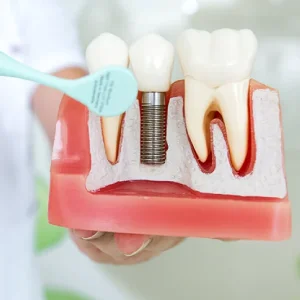
Molar implants are a type of dental implant specifically designed to replace missing back teeth, also known as molars. These teeth play a vital role in chewing, grinding food, and maintaining the alignment of your entire bite. When molars are lost, it can significantly impact your ability to eat comfortably and cause other teeth to shift.
A Molar Implant Consists of Three Key Components
- Titanium implant post: This component is surgically inserted into the jawbone and functions as an artificial tooth root, providing a stable foundation.
- Abutment: This small connector piece attaches to the implant post and supports the dental crown above it.
- Dental crown: The crown is custom-crafted to match your natural teeth and is placed on top of the abutment to restore your missing molar’s shape, appearance, and function.
Molar implants restore chewing function, preserve jawbone health, and help prevent the sunken facial appearance that often results from tooth loss. With proper care, they often last for decades, making them one of the most dependable tooth replacement options.
Benefits of Molar Implants
Molar implants offer a wide range of functional, aesthetic, and health benefits:
- Restored Chewing Ability: Molar implants fully restore your ability to chew, allowing you to enjoy a diverse and nutritious diet without pain or restriction.
- Jawbone Preservation: By acting like natural tooth roots, implants stimulate the jawbone and help prevent bone loss that commonly occurs after tooth extraction.
- No Impact on Adjacent Teeth: Unlike dental bridges, implants do not require the modification or support of neighboring healthy teeth, preserving their natural structure.
- Long-Term Durability: Dental implants can last over 20 years, often remaining strong and functional for a lifetime.
- Natural Appearance and Feel: Each implant is custom-designed to match the shape, color, and size of your surrounding teeth, creating a natural-looking and seamless smile.
Common Tooth Replacement Options vs. Molar Implants
When replacing missing back teeth, patients consider three main options: removable partial dentures, dental bridges, and dental implants. Each option varies in durability, function, comfort, and cost.
Removable Partial Dentures
These consist of replacement teeth attached to a gum-colored base and are held in place by clasps. While affordable and non-invasive, they lack the stability and strength required for molar function. Chewing tough or sticky foods can be challenging and may require adjustments or replacements over time.
Dental Bridges
Bridges are fixed prosthetics that rely on neighboring teeth for support. They offer more stability than dentures but require the alteration of healthy adjacent teeth. Over time, bridges may contribute to bone loss in the missing tooth area because they do not stimulate the jawbone.
Molar Implants
Unlike the above options, molar implants are surgically placed into the jawbone, acting as artificial tooth roots. They offer unmatched strength and durability, preserve jawbone density, and function like natural teeth. Molar implants eliminate the need to modify neighboring teeth and are designed to last decades with proper care.
While dentures and bridges may be suitable in some situations, molar implants remain the gold standard for long-term function, comfort, and bone preservation.
Who Performs Dental Implants?
Dental implants require advanced training, surgical precision, and restorative expertise, particularly for molars. Not every dental professional is qualified to perform this procedure, so working with a provider with specialized education and experience in implant dentistry is essential.
Professionals Who Commonly Perform Dental Implants Include:
- General dentists with advanced training in implant placement and restoration.
- Prosthodontists who specialize in restoring and replacing missing teeth with implants.
- Oral and maxillofacial surgeons are trained in complex surgical procedures involving the jaw and facial structure.
- Periodontists with expertise in gum health and bone preservation.
At Shahbazyan DDS Cosmetic & General Dentistry in Fresno, dental implant procedures are led by Dr. Shahbazyan, a skilled general dentist with extensive post-graduate training in implant dentistry and restorative procedures. He integrates cutting-edge digital imaging, guided implant placement, and patient-focused care to ensure high success rates and beautiful results.
Whether you need a single molar replacement or a full arch restoration, our clinic offers a comprehensive in-house approach to dental implants. We combine surgical precision with aesthetic excellence to restore both function and confidence in your smile.
Are You a Good Candidate for Molar Implants?
Here are five signs that you may be an ideal candidate for molar implants:
- If you have one or more missing back teeth, Molar implants are designed to restore chewing power and bite stability in the back of the mouth.
- Your jaw has sufficient bone density; molar implants need a strong foundation. If bone loss has occurred, a grafting procedure may be recommended before implant placement.
- You’re in good general and oral health. Candidates should be free of uncontrolled systemic conditions and have healthy gums to support successful healing.
- You want a long-lasting, fixed solution – If you prefer a permanent tooth replacement over removable options, molar implants offer the best durability and natural feel.
- You’re committed to oral hygiene and regular dental visits. Proper maintenance is key to implant success, and candidates must be dedicated to maintaining their oral health.
Why Molar Implants Are Worth the Investment
Molar implants offer a stable, long-lasting solution for replacing missing back teeth. Unlike dentures or bridges, they restore full chewing function, protect jawbone health, and preserve surrounding teeth. With proper care, they can last decades, making them one of the most effective tooth replacement options.
Whether dealing with one missing molar or several, choosing implants can help you regain your bite, comfort, and confidence with a solution that looks and feels like your natural teeth.
Ready to Restore Your Back Teeth with Molar Implants?
Looking for the most effective tooth replacement for your back teeth? At Shahbazyan DDS Cosmetic & General Dentistry, discover molar implants’ lasting strength and comfort.
Call us at (559) 435-5660 or visit us at 7575 N Cedar Ave. Suite 106, Fresno, CA 93720.
Schedule your consultation today and take the first step toward restoring your chewing power and confidence.
FAQs
Is it worth getting an implant for a back molar?
Yes, getting a molar implant is worth it. Back molars play a critical role in chewing and maintaining bite alignment. Replacing them with implants offers long-term stability, preserves jawbone health, and prevents the shifting of nearby teeth. Molar implants are among the most reliable tooth replacement options available.
How much is a back molar implant?
A back molar implant costs $3,000 to $5,000, depending on your location, oral health, and whether bone grafting is needed. While it may seem costly upfront, molar implants offer unmatched durability and function. They are a smart, long-term investment in your dental health.
Is a bridge or implant better for back teeth?
A molar implant is often better than a dental bridge because it does not affect neighboring teeth and helps preserve the jawbone. Bridges may be quicker to place but can lead to bone loss over time. Implants provide a more natural, permanent, and structurally sound molar replacement.
Can anyone get a molar implant?
Most healthy adults are good candidates for molar implants, especially those with sufficient jawbone density. A detailed evaluation by a trained provider specializing in dental implants will determine your eligibility and whether you may need preparatory procedures such as bone grafting.
How long do molar implants last?
Molar implants can last 20 years or more with proper care and regular dental checkups. Many patients enjoy their benefits for a lifetime. Their strength, stability, and resistance to decay make them one of the most dependable options for replacing missing back teeth and restoring chewing ability.
